
The top and crown of the scalp's hair are thinning the most.


We must explain to you how all seds this mistakens idea off denouncing pleasures and praising pain was born and I will give you a completed accounts off the system and expound.
Consultation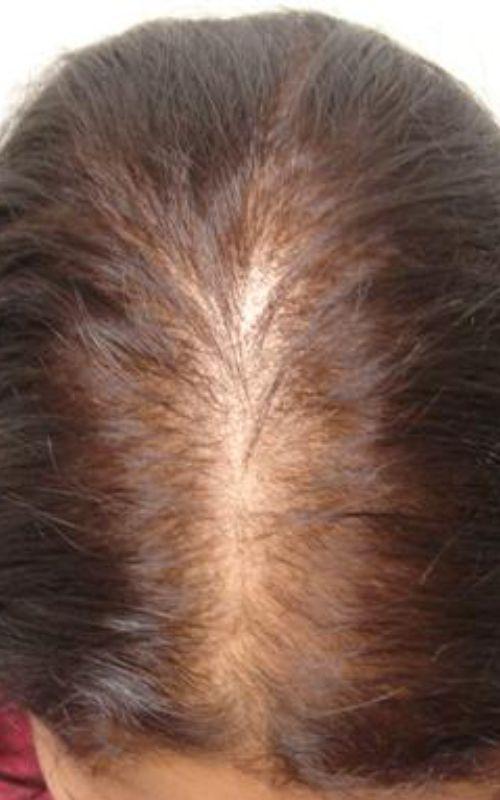
Female pattern baldness is assumed to be caused mostly by heredity. It may, however, arise as a result of an underlying illness that alters the synthesis of the hormone androgen. Androgen is a hormone that contributes to pattern baldness. Hair loss can be caused by tumours of the pituitary gland or the ovary, which release androgen.
Another cause of female hair loss is alopecia areata, a rare autoimmune disease in which the immune system destroys the hair follicles, causing hair loss. Certain medications, like those used to fight cancer, can induce hair loss as a side effect. When a person quits using the medication, their hair usually regrows. A significant disease, such as a severe infection, high fever, or surgery, can cause hair loss. Traction alopecia is triggered by using hairstyles that push the hair too tightly.
The top and crown of the scalp's hair are thinning the most.
Except for natural decline, the front hairline remains untouched.
As in males, hair loss seldom develops to total or near total baldness.
The hair on the head is finer, but the hair on the face is coarser.
A steady decline in crown hair
A sudden, unexpected loss of hair
Female Pattern Baldness is a disorder that worsens with time. One of the most effective therapies for female pattern baldness is platelet-rich plasma. It is a non-invasive, safe, and effective therapy with excellent results. The process entails collecting blood from the patient's arm and then spinning it twice in the centrifuge to separate the platelets. A dermatologist will then inject this platelet-rich plasma into the patient's scalp to stimulate the dormant hair follicles; the growth factors in the activated PRP help in the natural repair and re-growing of the lost hair.
Minoxidil is a topical medicine that is available in foam or solution form and may be administered directly to the scalp to aid with hair regrowth. It is also a safe therapeutic option, with the exception of pregnant and breastfeeding women. Minoxidil concentrations vary from 2% to 5% and should be taken only after consulting with a dermatologist. If administered incorrectly, minoxidil can cause hair growth in unwanted locations such as the brow and sides of the cheek.

