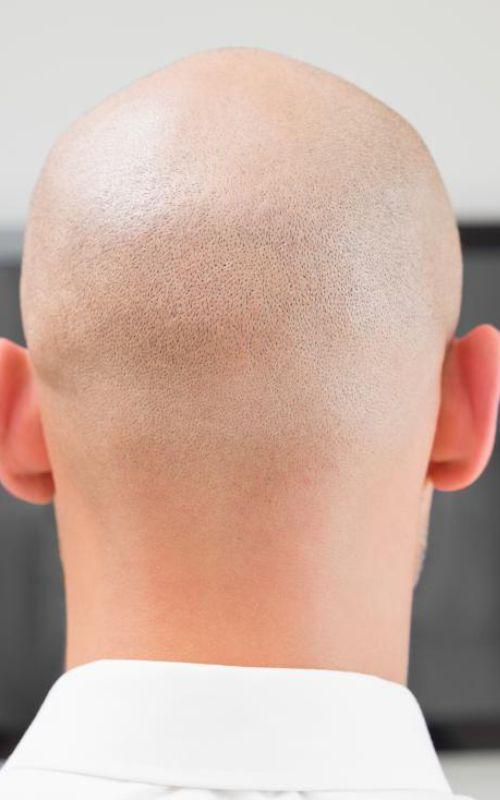
Patchy hair loss that ultimately spreads across the scalp.


We must explain to you how all seds this mistakens idea off denouncing pleasures and praising pain was born and I will give you a completed accounts off the system and expound.
Consultation
Alopecia totalis is an uncommon condition. In reality, you have a 2% lifetime risk of having alopecia areata, and alopecia totalis is significantly rarer, affecting 0.03 per cent of the population. It is unclear what causes alopecia totalis. It is thought to have an autoimmune relationship, in which your body's immune system destroys the hair follicles as if they were an invader (such as a virus).
In alopecia areata, immune cells known as NKG2D+ T cells (a kind of T cell) congregate around hair follicles, assault them, and prevent them from creating additional hair. Alopecia totalis may also have a hereditary component. A family member with alopecia totalis affects approximately 20% of persons with alopecia totalis. Furthermore, twin studies show that identical twins with alopecia totalis report their twin having the condition 50% of the time.
Patchy hair loss that ultimately spreads across the scalp.
Gradual hair thinning on the top of the head.
A handful of hair loss while combing or washing hair.
Patches of scaling that spread over the scalp.
Circular bald spots.
Full body hair loss.
There is no recognised cure for alopecia areata. Alopecia areata hair loss is associated with few severe physical symptoms and may resolve spontaneously. The psychological consequences, on the other hand, can be severe, and demanding treatment. Several therapies have been tested with various degrees of efficacy, and high-quality evidence is limited.
However, if the scalp involvement is less than 50%, there are still some therapies available for Alopecia Totelis. Triamcinolone injections into areas of patchy alopecia of the scalp, beard, or brow have an immunosuppressive effect and may hasten hair regeneration. Repeat four to six times each week until regrowth is complete. Potent corticosteroid solutions, Minoxidil solution, or Anthralin (dithranol) cream or ointment are also available as topical therapies.