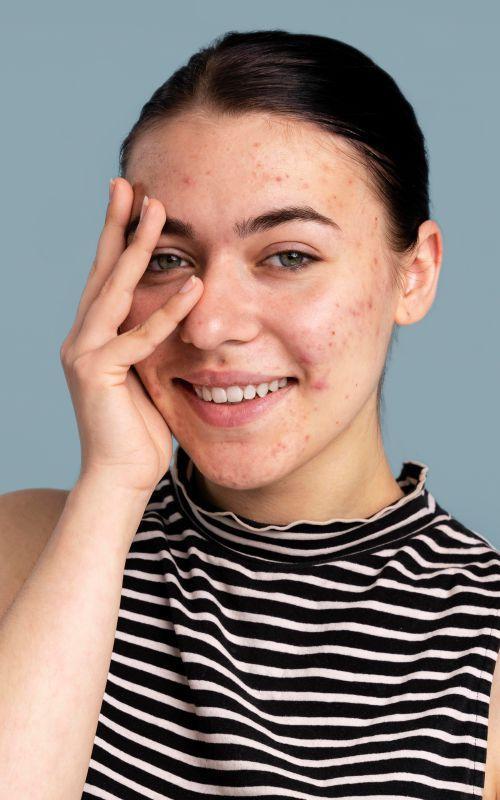
Whiteheads are tiny lumps or patches that are colourless or pale.


We must explain to you how all seds this mistakens idea off denouncing pleasures and praising pain was born and I will give you a completed accounts off the system and expound.
Consultation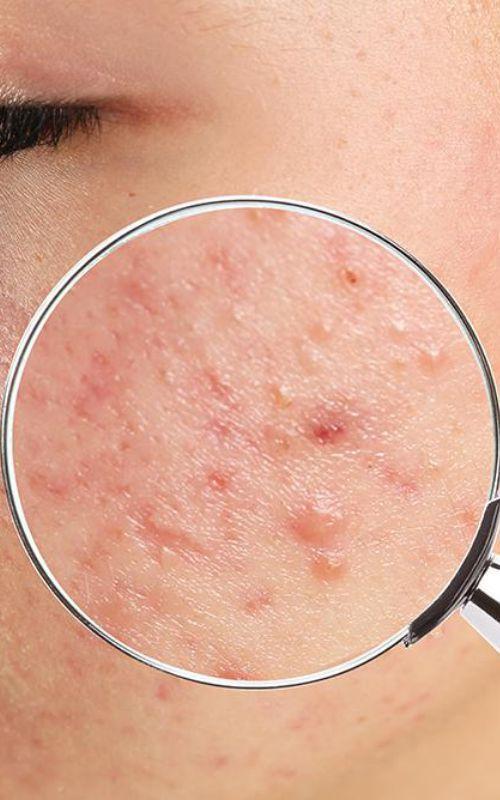
When bacteria, oils, and dead skin cells clog and inflamed pores, the microscopic openings in your skin through which sweat and oil rise to the surface, an acne lesion (pimple) develops. Your skin sheds 40,000 cells per hour, yet occasionally one of those dead cells gets stuck in a pore. There are occasions when small, clogged pores cause "whiteheads or blackheads." These pores can sometimes swell up and cause different kinds of acne.
The lesion is often small and heals fast if the rupture happens close to the skin's surface. When there is a significant rupture in the follicular wall, more serious lesions develop. A healthy layer of skin is destroyed when the infectious substance leaks into the dermis.
How much collagen your body produces determines the sort of scar.
Whiteheads are tiny lumps or patches that are colourless or pale.
Blackheads are tiny, dark-colored pimples that can have a slight bumpy appearance.
Papules are little, raised bumps that lie beneath the skin's surface.
Larger, sensitive lumps called pustules have a distinct circular centre packed with pale or yellow pus.
Deep within the skin, nodules are hard, inflammatory lumps.
Large, painful, red or white lumps called cysts are found deep within the skin.
There are numerous cosmetic procedures available. The finest alternatives for your acne scars can be discussed by you and your dermatologist. Repeat operations or the requirement for two or more different types of procedures to repair a patient's skin are not uncommon.
Procedures for resurfacing:
Further steps:
Find out what other options could be best for you by speaking with the best dermatologists with Revitalis!